In mid-June 1940, John Durnford-Slater was a career officer in the British Army who was bored with staff duty and wanted adventure. His big break came that summer when the British high command requested volunteers who would raid the enemy coast. Slater volunteered immediately and became the first British (Army) Commando.
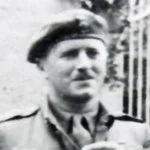
John Durnford-Slater
On June 28th, he was appointed to lead No. 3 Commando. He was free to organize, recruit and train the unit as he liked since they were experimenting with a new type of warfare. Recruiting a new type of soldier for a new type of warfare presented some of the same challenges that any business faces when recruiting employees. Slater decided that the ideal commando would be confident, self-reliant, reticent, and willing to push his physical and mental limits in support of the mission.
Slater began as any human resources manager would, doing background checks on each of his officer candidates, talking to former civilian employers and reviewing military service records. After selecting his officers, Slater sent them out in groups of three to choose the enlisted men. The officers had four days to make their selections. By July 5th, the unit officially existed. Initially, No. 3 Commando consisted of ten troops, each with three officers and 47 men. With Slater’s headquarters staff, the full complement was 500 men. Later, the unit reorganized so that each troop could fit within their assigned landing craft.
Although each man was a volunteer, each troop leader had authority to remove any officer or trooper deemed unsuitable. Unsuitable sorts included braggarts, indiscreet talkers, and tough-guy criminal types who Slater thought would be cowards in combat conditions. The process was called “return to unit” or RTU and remained the ultimate disciplinary threat throughout the war.
To save time, each commando was given a subsistence allowance (i.e., per diem) and required to find their own housing and food. Slater believed this enhanced each soldier’s self-reliance and initiative. It also meant that with no barracks to maintain, the men were available to train day and night.
The training was so brutal that the Medical Officer examined each man after a training exercise. A few men were RTU’d after being injured during training. But the training was also remarkably flexible. Any man could suggest a new training exercise or technique and suggestions that increased efficiency or reduced mistakes were adopted. (Today, business leaders call this approach to process improvement Six Sigma.)
On July 14 - 15, less than three weeks after its creation, No. 3 Commando carried out their first raid on the island of Guernsey. Guernsey lies closer to the French coast than the English coast but has been part of England since medieval times. The mission was to knock out the communications network of the German occupation soldiers. The operation was a flop and resulted in three commandos sitting out the war as prisoners.
The Guernsey fiasco provided ammunition to the Army command in southern England who referred to the commandos as Winston Churchill’s private army and wanted to abolish the unit. The Army command hated losing some of their best men to the commandos and worse, having the commandos operating outside of the Army’s chain of command.
Slater had little patience with the Army leaders, dismissing them as stuck in the past and focused on 19th century battle tactics. His battles with the Army command will be familiar to every manager who has tried to introduce new processes which have not yet proven their value.
Like every creative business leader, Slater found a way to succeed. He bypassed the sclerotic Army command and invited the Royal Navy to train the commandos, which made sense since commando operations usually started with a sea landing. Slater was also helped by the fact that he had the support of the Prime Minister and the top brass. The commandos reported directly to the Chief of Combined Operations, Lord Roger Keyes and later, Lord Louis Mountbatten.
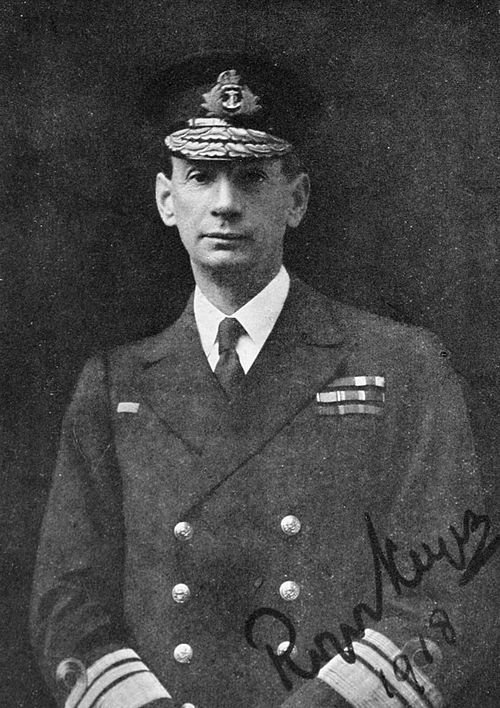
Lord Roger Keyes
In December 1940, Lord Keyes invited a bevy of politicians and senior military men to witness a full-scale rehearsal of a sea landing. Unfortunately, No 3. Commando had trained all day and missed their 1 am wakeup call. Slater awoke at 1:45 am and immediately began roaring at his officers to wake their men. However, only a third of the commandos made it into the landing craft for the exercise.
Lord Keyes was embarrassed in front of his guests. Slater apologized profusely saying, “I’ve let you down horribly”. Lord Keyes responded, “Yes, you have, but you’ve had your lesson. Now this will never happen to you operationally where it could truly mean disaster”. (If only every C-suite leader was this forgiving!) Lord Keyes was right; it never happened again. The commandos practiced obsessively to ensure their operations stayed on task and on time.
No. 3 Commando’s first successful raid was in February 1941 when they attacked the Lofoten Islands in northern Norway. The commandos blew up fish oil factories, knocked out communications and collected German soldiers and Norwegian collaborators as prisoners. It was the first of many successful raids lasting until the war ended.
However, their training methods and missions meant they had a high attrition rate. Recruitment continued non-stop as injured or unsuitable men were dismissed from the commandos. Competition for new recruits was as brutal as the training. On one occasion, Slater heard that his friends at No. 4 Commando were scouting a new batch of recruits.
Slater hot-footed to the Commando Replacement Depot for a chat with the drill instructor. Slater suggested having half the replacements fall in for formation in their best battledress while the other half should wear old clothes. When No. 4 Commando arrived, they chose the smartly dressed troops, leaving No. 3 Commando the supposed dregs. What No. 4 didn’t know was that Slater had asked the drill instructor to have the best men wear old clothes.
Despite the incredibly high attrition rate, morale remained high among the commandos and there were always plenty of volunteers waiting to join. One of the reasons morale remained so high was that Slater and his officers took care of their men. On one occasion, the officers pooled their money and bought champagne for their men to enjoy during a lull in the fighting.
No. 3 Commando became so famous that government officials and senior officers begged to accompany the troopers on patrol. Civilians were taken on patrols in which one troop would hide near the patrol area and pretend to be the enemy. After an exchange of harmless gunfire, the civilians were taken back to base to brag about their adventure. Military men were taken on real patrols with the possibility of being shot by the enemy.
No. 3 Commando fought in North Africa, Italy, Operation Overload (“D Day”) and all the way to the Ruhr Valley, Germany’s industrial heartland. As the war progressed, the Army Commando units were combined with the Royal Marine Commandos. In 1946, the Army Commandos were disbanded but their training methods and esprit de corps continue in the Royal Marine Commandos.
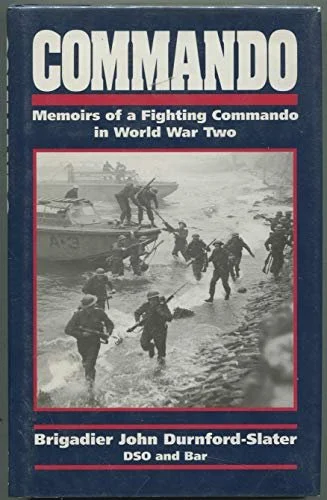
John Durnford-Slater, DSO and Bar, recounts many more adventures in his memoir, Commando: Memoirs of a Fighting Commando in World War Two (1991 reprint). Slater died in 1972.
If you would like Norma’s blog sent to your inbox, we invite you sign up by clicking here! And we will see you next time!
And be sure to follow Norma on LinkedIn