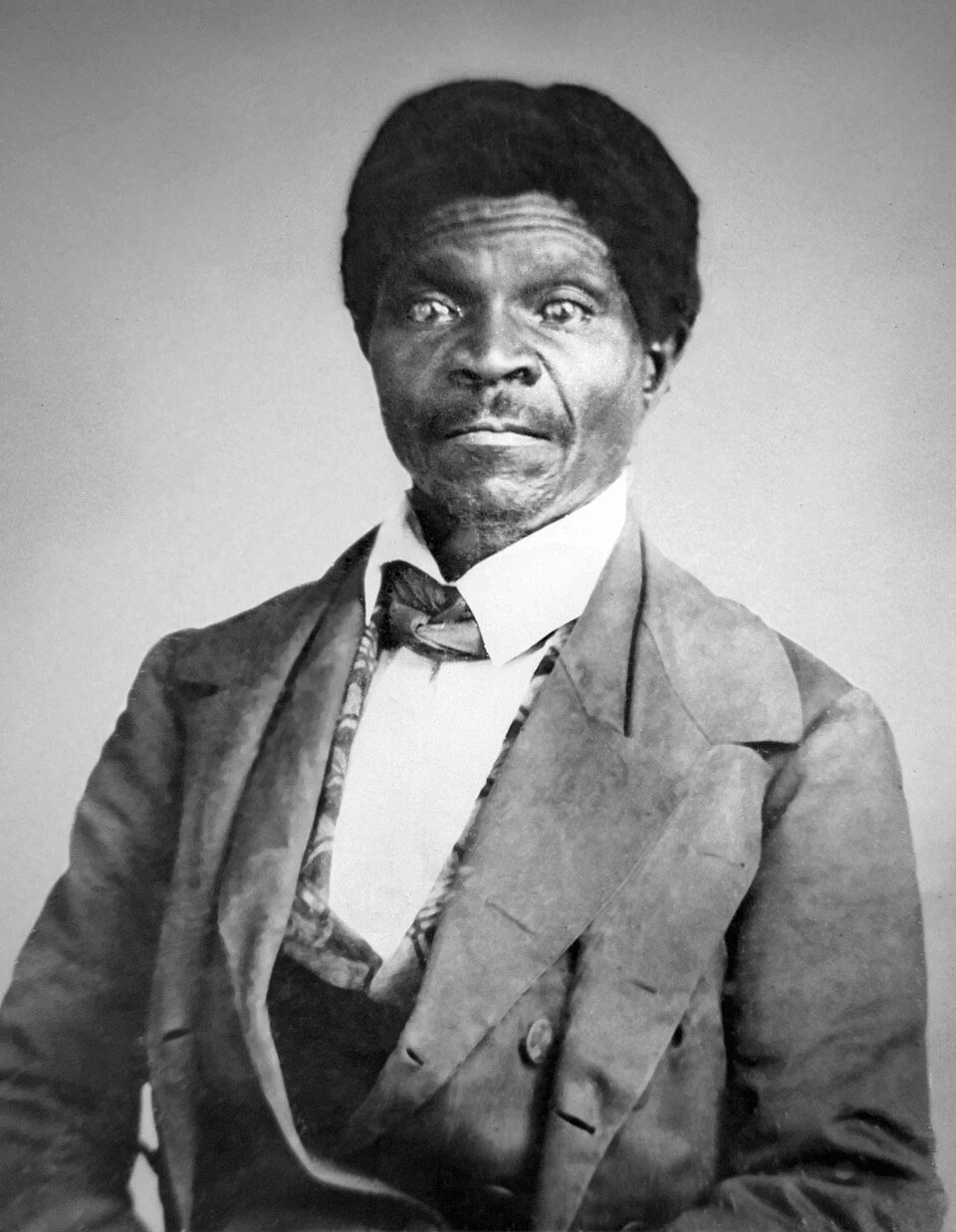
Dred Scott was an ordinary man of his day. The color of his skin and his place of birth, Virginia, dictated that he was a slave. In 1830, his then-owner, Peter Blow, moved his family to St. Louis, Missouri, bringing along Dred Scott. Peter Blow was a lousy businessman and when he died in 1832, Dred was sold to help pay off his debts.
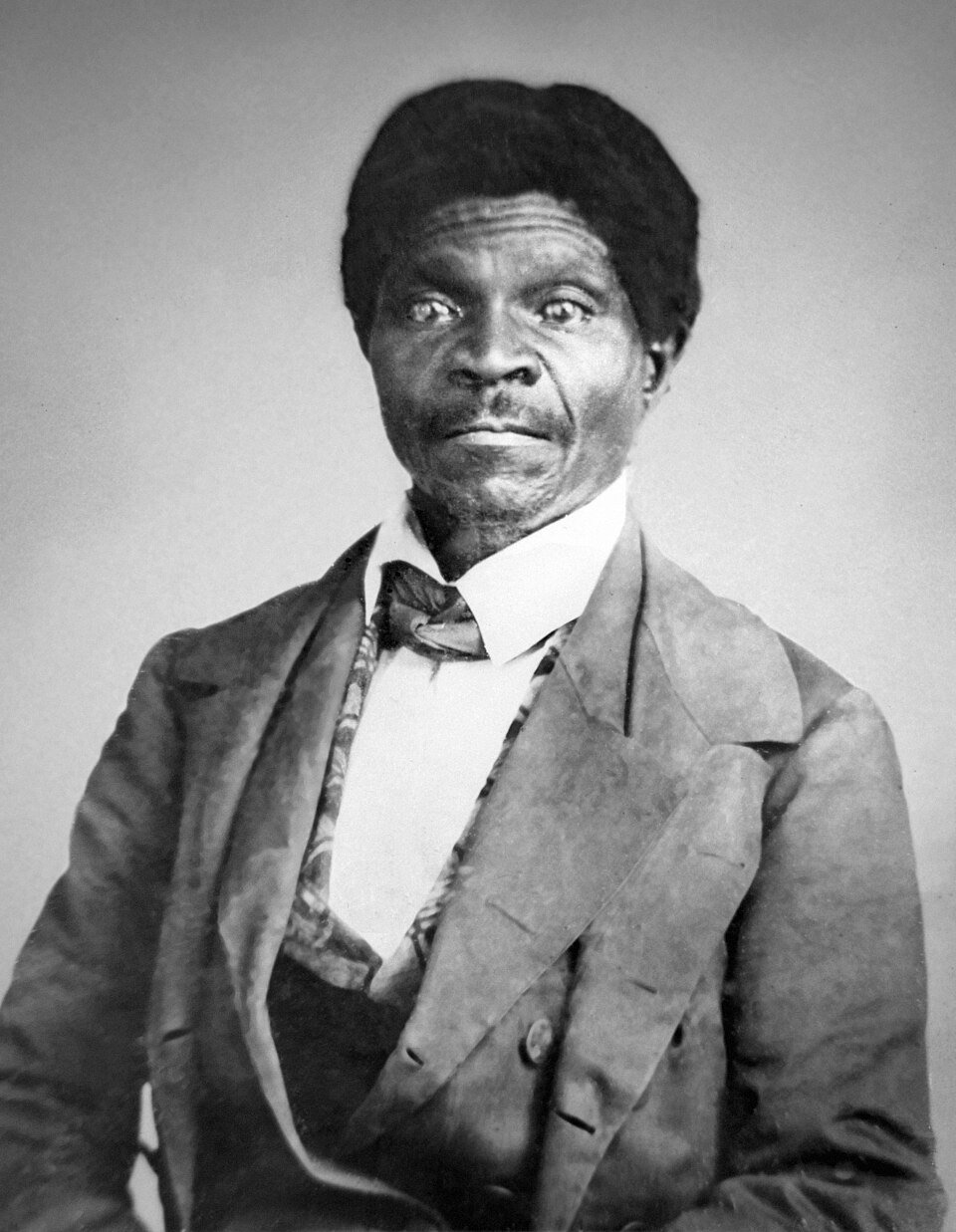
Dred Scott
Dred was sold to Dr. John Emerson, an Army surgeon. In 1833, Dr. Emerson was posted to Rock Island, Illinois and he took Dred along to this free state. A few years later, Dr. Emerson was transferred to a fort near present-day St. Paul, Minnesota, also free territory. Eventually, they returned to Missouri, a slave state.
In 1843, Dr. Emerson died and Dred tried to purchase freedom for himself, his wife, and their children. Emerson’s widow rejected his offer. Dred Scott then filed suit in Missouri arguing that when Dr. Emerson took him to live in a free state, he was emancipated. His argument followed a long line of Missouri Supreme Court decisions from the 1840’s holding that once a slave left Missouri to live in a free state, he became free.
He lost his first case on a technicality but won in a second suit. But widow Emerson wasn’t giving up. She filed an appeal to the Missouri Supreme Court in 1852. By the 1850’s, attitudes had hardened. Slave states, like Missouri, were angry at the growing political power of the northern states.

Missouri Supreme Court
Southern slave states had significantly smaller populations than northern free states. They knew it was only a matter of time before northern abolitionists succeeded in passing a federal law banning slavery. Their bid for demographic parity and control of Congress was to expand slavery into the western territories soon to become states. Sidestepping the political mess, Congress created a fudge called the Missouri Compromise of 1850.
This law admitted California as a free state but allowed other western territories to decide by popular vote if they would be slave or free when they voted on statehood. Like all compromises that are fudges, everyone hated it. For abolitionists, it didn’t go far enough because it didn’t prohibit slavery. Southerners hated it because they believed most westerners were recent immigrants who were unlikely to vote for slavery having just fled oppression in their countries of origin.
With this hostile background, the Missouri Supreme Court chucked the line of cases that favored Dred Scott. The court decided they did not need to defer to the laws of Illinois, a free state. They also ignored the Missouri Compromise. Looking solely at Missouri’s laws, they reversed the trial court ruling in Scott’s favor, leaving him a slave.
Dred Scott’s lawyer decided to roll the dice on a new and risky legal strategy. He filed a federal lawsuit in 1853 in St. Louis arguing that Dred Scott was a free man because he had lived in a free state. As a free man, he was a citizen of Missouri and as a citizen, he could sue in federal court.
The defendant in this new suit was John Sanford (a Supreme Court clerk later misspelled his name as Sandford), the brother of widow Emerson and the executor of Dr. Emerson’s estate. Since Sanford was a citizen of New York, there was diversity of jurisdiction, providing the procedural grounds for filing in federal court.
Scott claimed that Sanford committed trespass by holding him (Dred) as a slave against his will. For the next few months, a flurry of motions piled up on the court’s docket. Finally, in 1854, the judge ruled that Scott could file suit in federal court and set the case for trial. But at trial, the judge instructed the jury to rule in favor of Sanford. The judge stated that since Scott had voluntarily returned from a free state to the slave state of Missouri, he must be considered a slave under Missouri state law.
Onward and upward went the case, on appeal to the U.S. Supreme Court where oral argument was set for 1856. Three issues were presented to the court. Was Scott a citizen of Missouri entitled to sue in federal court? Was the Missouri Compromise constitutional? Was Scott still the slave property of Sanford?
If the Supreme Court reversed the trial court’s ruling that Scott could sue in federal court, then they wouldn’t have to rule on the merits of the case. To decide the merits meant they would be deciding whether the Missouri Compromise was constitutional. That would mean wading into the hottest political and social issue of the day.
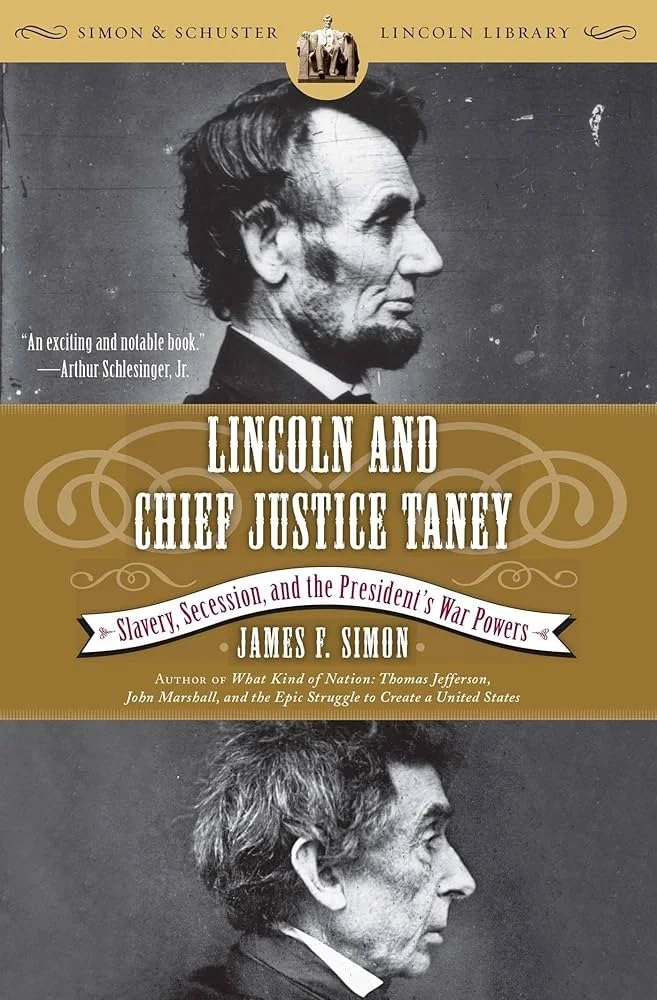
In 1856, the court was dominated by appointees from southern slave states, including Chief Justice Roger B. Taney (Chief Justice, 1836 – 1864). When the court met for their initial deliberations, they quickly realized that they couldn’t reach a consensus on the issues presented.
Their confidential deliberations were leaked to the abolitionist New York Tribune newspaper by Justice John McLean. Justice Benjamin Curtis blabbed details in a letter to his uncle. (Today’s Roberts court also leaks like a sieve.) Reports stated that the majority wanted to issue a narrow ruling on the jurisdictional issue of whether Scott could sue in federal court and so avoid the whole ugly mess of deciding whether the Missouri Compromise was Constitutional.
Finally, in May 1856, the Supreme Court put the Dred Scott case back on their docket to be reargued in December. As a result, the justices avoided making a decision that could have influenced the presidential election in November 1856, when James Buchanan was elected.
After the rehearing, Taney wrote the court’s majority opinion, and it was truly awful. It reeked of racial bigotry and southern anger at the self-righteous abolitionists. Taney declared that under Missouri state law, Scott was a slave, not a citizen, and so he had no right to sue in federal court. He added that blacks were inferior to and not fit to associate with white people, a generalization he claimed was supported by the Constitution, although he failed to cite any proof for this assertion.
After trashing Dred Scott’s humanity, Taney went on to declare the Missouri Compromise unconstitutional on the grounds that Congress had no authority to prohibit slavery in new western territories. He again failed to cite any legal precedent to support his ruling.
The decision outraged abolitionists and galvanized their efforts to ban slavery in the U.S. Pro-slavery, or “states’ rights” as they preferred, southerners openly talked of secession. The decision contributed to the hysteria surrounding the 1860 presidential election during which the pro-slavery vote split, throwing the election to Abraham Lincoln.
The Dred Scott decision was everything the slave states desired, but it was a pyrrhic victory. The slave states seceded and then lost the Civil War. Before they were readmitted to the Union, they were required to ratify the 14th Amendment.
The 14th Amendment, Section 1 states, “All persons born or naturalized in the United States, and subject to the jurisdiction thereof, are citizens of the United States and of the State wherein they reside. No State shall make or enforce any law which shall abridge the privileges or immunities of citizens of the United States; nor shall any State deprive any person of life, liberty, or property, without due process of law; nor deny to any person within its jurisdiction the equal protection of the laws.”
Today’s U.S. Supreme Court is pondering whether Section 1 means what it says. During the recent oral arguments, the Solicitor General referred to the Dred Scott decision to support his revisionist argument that Section 1 applies only to former slaves of the 1860’s and not to today’s children born to undocumented immigrants.
If the conservatives on the current Supreme Court decide to toss aside over 100 years of established interpretations of Section 1, it will be another pyrrhic victory that hastens the political and social changes they dislike. It will also leave them as reviled as Taney’s court.
After losing his case, Dred Scott was deeded to an abolitionist who immediately freed him. He returned to St. Louis where he died of tuberculosis in September 1858.
This account of the Dred Scott case is taken from Lincoln and Chief Justice Taney: Slavery, Secession, and the President’s War Powers, by James F. Simon (2006).