The country was a mess. Inflation was rising faster than wages, leaving much of the population hungry and desperate. Adding to the cost was a series of bad harvests, which meant food was scarce, as well as pricey. Inflation was set to continue rising as the government funded a foreign war.
Everyone knew the country was a mess. But the political and social leaders adamantly refused to allow any reforms that would diminish their privileges. They threw lavish parties, eating and drinking and gambling, and believing that the poor were simply too lazy and stupid to better themselves.
It was 1788 and France was a bonfire waiting for a spark. Of 26 million French citizens, 21 million were farmers, most working fewer than 20 acres. Able-bodied individuals fled to the cities in search of higher wages only to find inflation outpacing their wages. Royal edicts prohibited workers from forming associations for collective bargaining. (Today we call these sorts of bans “right to work” laws that block union activity.)
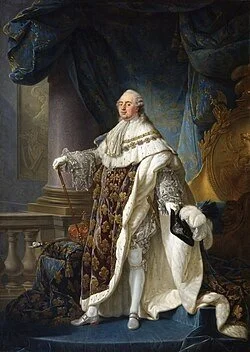
King Louis XVI
King Louis XVI sat at Versailles, entertaining extravagantly and eating gluttonously. His wife, Marie Antoinette, was unpopular and still considered an immigrant outsider after 20 years of marriage. She was a reckless gambler like the king’s brothers and Louis was constantly required to pay their “debts of honor”. The whole royal family treated the national treasury as their piggy bank to be looted to pay for their corruption.
The corruption and inequities were staggering. Peasants paid the taille, a direct tax and the corvees royale tax to maintain roads and bridges. They were subject to feudal dues assessed by local seigneurs, who often donated the dues to abbeys and senior clergymen. Village curates might be as poor as their parishioners, but the Church was fabulously wealthy.
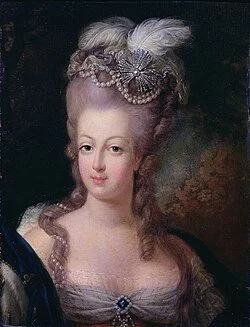
Marie Antoinette
The Church and nobility were exempt from both the taille and the corvees royale. The nobles were liable for an income tax, but they could usually negotiate or bribe their way into paying a reduced amount or nothing at all.
The Church owned a tenth of all the land in France and controlled all the schools. Senior clergy were drawn exclusively from the aristocracy and royal blood, which gave them access to influence government policy.
Aristocrats and nobility were more despised than the Church. About 400,000 nobles owned 20 percent of the land, usually as huge estates. Their seigneurial privileges allowed them to control the corn and flour mills, wine presses, and bread ovens; the engines of industry in the countryside. They could grab public land for their exclusive use. They actively collaborated with the crown and clergy to ensure most citizens remained poor, oppressed, and over-taxed.
Squeezed in the middle was a growing urban middle class. As their income increased, the nouveau riche bribed the king to ennoble them or appoint them to public office which offered an opportunity to climb the social ladder while also enriching themselves. They cemented their new status by marrying their daughters to impoverished aristocrats and nobles who were overjoyed to acquire huge dowries to underwrite their lifestyles. A hundred years later, wealthy American industrialists would follow the same path into the British nobility and aristocracy.
Each level of society wanted to maintain their own privileges while curtailing the privileges of others. The nobility wanted to get rid of royal absolutism and require the king to consult them. The middle class wanted to replace the hierarchy of birth with a hierarchy based on wealth or profession. Ambitious lawyers were the main proponents of this change. No one cared about what the peasants and urban workers wanted or needed.
All these issues had been bubbling under the surface for decades. The catalyst for the revolution was the king’s foreign war. Louis XVI had been persuaded to support the American colonies in their fight against Britain. The Americans gained independence. France earned insolvency.
Finance Minister Baron de Laune proposed new taxes but his tactlessness annoyed everyone and the king replaced him with Jacques Necker. Necker knew the complicated tax system was the root cause of social unrest. But he also realized that reforming the inequitable tax code would be almost impossible due to all the entrenched interest groups. (For a modern American inequity, research “carried interest” which allows the wealthiest Wall Street investors to pretend that the money they earn is not “income” under the tax code. You’ll feel like a French peasant in 1788.)
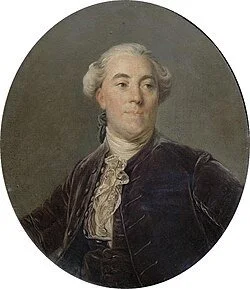
Jacques Necker
Necker proposed borrowing money rather than raising taxes based on the dubious argument that a huge national debt wouldn’t be a burden on the government’s finances. Of course, he had to offer an extremely generous interest rate to attract investors. A few sane government ministers intervened and ensured Necker was shown the door.
His replacement, Charles-Alexandre de Calonne, was shocked at the shaky finances and immediately proposed reforms to the tax system. The most controversial reform was a permanent land tax that would be owed by all landowners. Nobles and the Church fought viciously to preserve their tax-exempt status. Fearing for his life, Calonne fled to England, becoming the first émigré of the French Revolution.
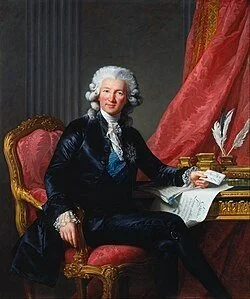
Charles-Alexandre de Calonne
Calonne’s replacement, Brienne, offered a watered-down version of Calonne’s tax reform. But the debates in regional parlements became so heated that on May 8, 1788, Louis XVI stripped them of their power to oppose the monarchy. The provincial power brokers promptly joined the peasants in riotous protests.
Brienne then came up with his own brilliant solution. He called for the Estates General to assemble at Versailles in May 1789. The Estates General was a consultative body that hadn’t met since 1613. Its members were split equally among the nobility, clergy, and the Third Estate, meaning commoners. But this arrangement would allow the nobility and clergy to combine their votes to prevent any meaningful changes.
To limit this possibility, the king was persuaded to issue an edict declaring that the Third Estate would have double representation. Every man (women couldn’t vote in national elections until 1975) over 25 years of age whose name appeared on the tax rolls was eligible to vote.
Months later in May 1789, the delegates assembled at Versailles, consisting of 291 nobles (mostly conservative provincial landowners), 300 clergymen, and 610 members of the Third Estate (many of them lawyers). Each group agreed that they wanted to end royal absolutism, although not necessarily to end the monarchy. They also agreed that the Estates General should meet regularly to vote on taxes and approve new legislation. They all demanded freedom of the press and individual liberty.
Other demands included unification of laws across the country, standardization of weights and measures, an end to government waste and abuse of the public finances, reform of internal customs barriers, and reforms of the Church. All of these demands were expected to be memorialized in a new constitution.
At that point, the delegates began bickering over the details. Their only notable decision was to rename themselves the National Assembly, which remains the name of the French parliament. While they bickered, a food shortage caused a sharp increase in the price of bread. Hungry peasants rioted in Paris and Versailles.
The king was alarmed and called up troops to protect government buildings. In Paris, citizens decided to protect themselves from the king and his troops and they looted military armories. On July 14, 1789, they stormed the Bastille. The revolution had begun.
The U.S. is entering a long, hot summer with rising inflation, a national election, and a foreign war that is bankrupting the country. Years of inequitable taxation, income inequality, and entrenched special interests have undermined social welfare programs, all of which is exacerbated by an unpopular head of state who yearns for presidential absolutism. Like France in 1789, it only takes a spark to start a revolution.
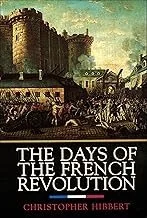
This account is based on The Days of The French Revolution, by Christopher Hibbert (1980), an enjoyable, fast-paced account of a complex story.
If you would like Norma’s blog sent to your inbox, we invite you sign up by clicking here! And we will see you next time!
And be sure to follow Norma on LinkedIn