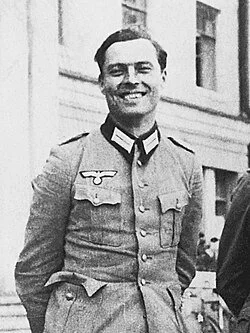
Every July 20th, I pause to salute the brave men and women who tried to save their country from a paranoidal megalomaniac. They were doomed, in part because they missed their target, but their story is an inspiration for others resisting an authoritarian government.
On July 20, 1944, Claus Schenk, Graf von Stauffenberg, brought a bomb hidden in a briefcase, to a military briefing at the headquarters of Adolf Hitler. Stauffenberg set down the briefcase and soon excused himself from the meeting to “take a phone call”. The bomb exploded. Unfortunately, Hitler didn’t die.
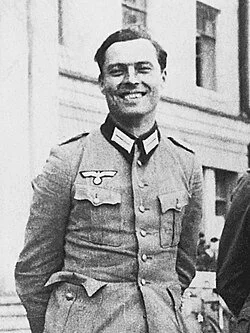
Graf von Stauffenberg
The man who planned the attack was General Henning von Tresckow, a brilliant organizer and charismatic man. He came from a minor Juncker family in Pomerania and was related to most of the noble and aristocratic families of Prussia and Silesia (now southwest Poland).
He joined the German Army in 1917 and became a lieutenant at the age of 17. After World War I, he left the German Army to attend university and then worked at several banks. He also traveled the world for a few years, which gave him a broader perspective than most of the German officer class.
In 1926, he rejoined the German Army and graduated first in his class from the Kriegsakademie, a staff officer training program similar to the U.S. Army War College, at Carlisle Barracks, Pennsylvania. Everyone knew he was a golden child, destined for glory and promotions.
Initially, Tresckow was a tepid supporter of Hitler’s policies that restored German national pride and expanded the military, while flouting the Treaty of Versailles. (A friendly suggestion to politicians today: If you “win” a war and insist on gloating by imposing a one-sided treaty that inflicts national humiliation on the loser, start preparing immediately to fight the next war.)
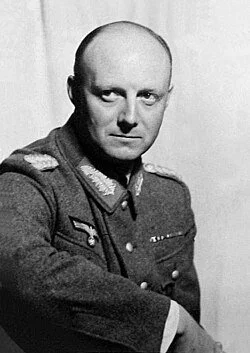
Henning von Tresckow
Tresckow quickly soured on Hitler and the Nazis. His sense of morality and basic decency was appalled by what they did. Hitler ignored the laws he didn’t like, crushed the free press, and sent his hooligans to attack anyone that he considered an enemy. He euthanized citizens with physical or mental disabilities (using methods that were refined later for the mass murder of Jews, Gypsies, and others) and threw his political enemies into proto-type concentration camps at Dachau and Oranienburg.
But the final outrage for Tresckow seems to have been the Commissar Order delivered by Hitler when Russia was invaded in 1941. This Order required the German Army to assist the SS in killing all suspected members of the Communist Party. Other orders from Hitler expanded the killing to include the mass murder of Jews.
Tresckow joined an expanding group of civilians and German Army officers who dreamed of killing Hitler. Dreaming and moaning about how Hitler was ruining Germany was all they did until Stauffenberg and Tresckow showed up.
Tresckow masterminded several plots that failed. On one occasion, wine bottles loaded with explosives failed to blow up due to a defective fuse when Hitler’s plane reached cruising altitude. Tresckow sent a close associate to fast talk his way past security guards to retrieve the “gift” package when the plane landed in Berlin.
Finally, on July 20th, Stauffenberg almost succeeded. (To understand why Hitler wasn’t killed, watch the episode of the Mythbusters television series that recreates the event.)
In an epic fail for the secret police, the Gestapo learned about the July 20th plot after the bomb detonated. Their incompetence is explained by two facts. First, the Gestapo lacked spies in the German Army who could have reported the plot. Second, most of the participants in the plot came from the same families. They had private, family lines of communication that were impenetrable by the Gestapo. (Blood really is thicker than water.)
When Hitler didn’t die, the real bloodbath began. The Gestapo arrested everyone known or suspected of ever disagreeing with Hitler. Innocent family members were arrested. Under torture, some named names, leading to more arrests and torture.
Bogus court martial proceedings presided over by Field Marshal Gerd von Runstedt stripped the military men of their rank and expelled them from the Army. The cashiered officers were immediately arrested by the Gestapo and taken away to stand trial for treason.
Roland Freisler, a rabid Nazi, presided over a kangaroo court that ignored due process niceties, like having defense counsel to represent the accused. He constantly screamed abusively at them before pronouncing death sentences. The proceedings were filmed for Hitler’s later viewing pleasure (as were the executions), which allow us today to see the clown-show put on by Freisler.
The defendants used what little time they were allowed in court to explain why they opposed Hitler. They hoped their aspirational speeches would inspire others to rise up and oppose Hitler.
It didn’t. The plot to kill Hitler was a top-down attempt at regime change, organized by Prussian aristocrats. It never occurred to them to consult the average German, even if they had been able to do so. The average German was either enamored by the cult of Adolf Hitler, believing God had saved him from the assassins, or they were so terrorized by the cruelty and violence of the regime that they believed resistance was futile.
Stauffenberg was shot on the evening of July 20th when he returned to Berlin, by order of his commanding officer, General Fromm, who was trying to cover up his own culpability in the plot. (Fromm failed. He was later arrested and executed.) Tresckow blew himself up with a grenade just before Gestapo agents arrived in Russia to arrest him. In a sense, they were the lucky ones because they escaped torture and death by slow strangulation.
Today, around the globe, right wing “messiahs” are using cults of personality to anchor their authoritarian governments. Authoritarians stay in power by wrecking the democratic institutions that would constrain them. They control the media and propagate “alternative facts” that defy common sense and logic. They govern through violence and intimidation, picking off “enemies” one at a time in trumped up prosecutions. They create fake enemies to unify people in an “us against them” universe.
The conspirators deserve a salute for trying to save their country from the nihilism of Hitler’s authoritarian government. Their biggest mistake was to not seek popular support. Recently, popular support bounced authoritarian, Victor Orban, out of power in Hungary. Fortunately, Orban went quietly. When most dictators realize they are losing power, they try to destroy the country that has rejected them.
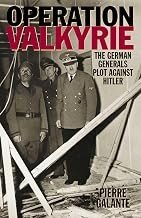
Operation Valkyrie: The German Generals’ Plot to Kill Hitler, by Pierre Galante with Eugene Silianoff (1981), tells the July 20th story from the viewpoint of Lt. Gen. General Adolf Heusinger, a conspirator who lived because he was injured in the bomb attack.
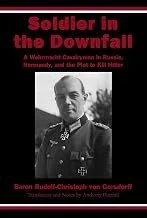
Soldier in the Downfall, by Baron Rudolf-Christoph von Gersdorff (2012, English translation), is the memoir of another conspirator who escaped a death sentence when Freisler died in an Allied bombing raid that destroyed the court.
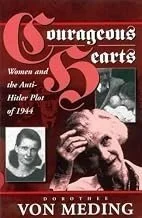
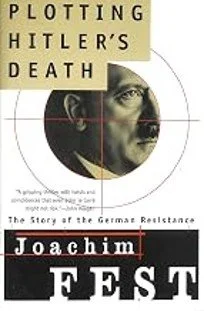
An overview of all German resistance groups is Plotting Hitler’s Death, by Joachim Fest (1996). Courageous Hearts, by Dorothee von Meding, contains interviews with the female relatives of key conspirators.
If you would like Norma’s blog sent to your inbox, we invite you sign up by clicking here! And we will see you next time!
And be sure to follow Norma on LinkedIn